Markdown for Agents: What It Is, How It Works & Key Benefits | OnlineMiniTools
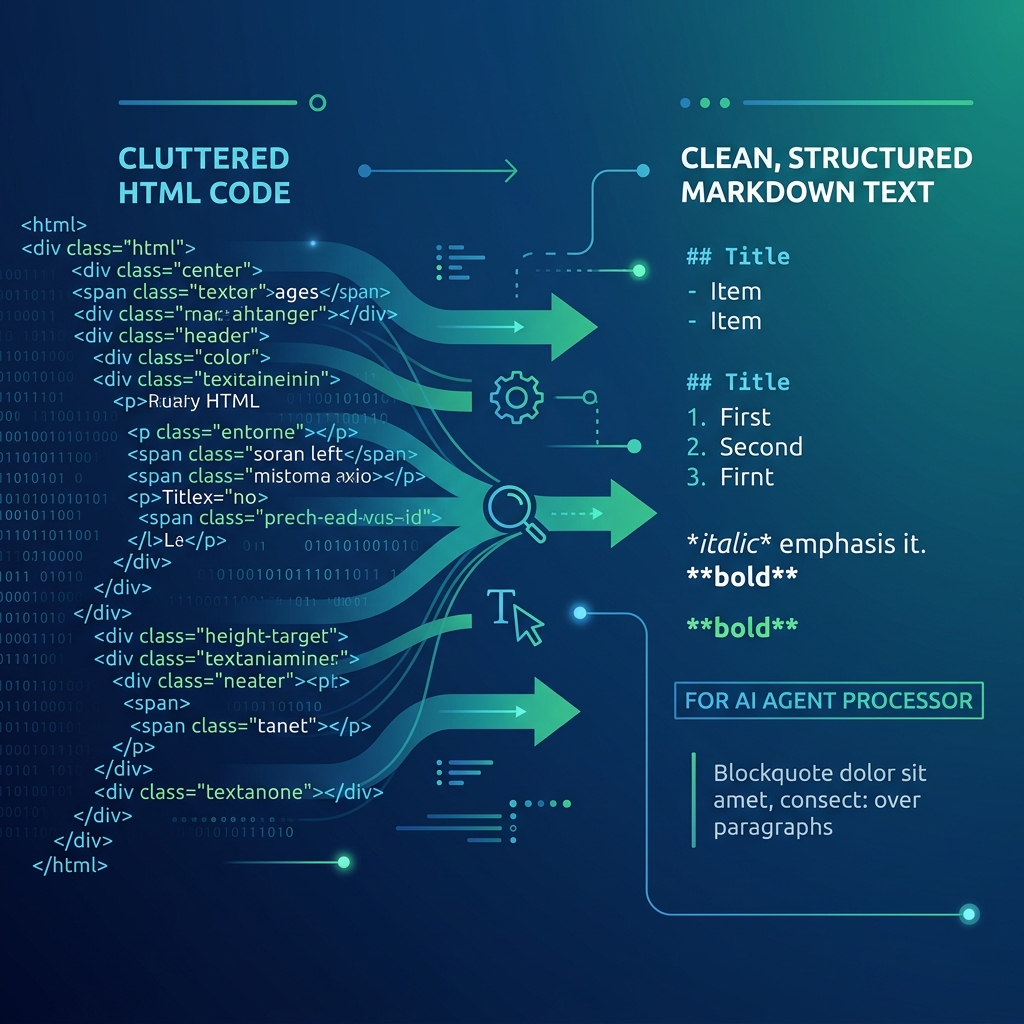
Markdown for Agents is an open HTTP content negotiation standard designed to serve clean, structured Markdown directly to AI web crawlers, LLM bots, and RAG pipelines. Instead of retrieving bloat-heavy HTML files, clients send an Accept: text/markdown header, and compatible servers respond with pure Markdown text, reducing LLM token consumption by up to 80 percent while accelerating response times.
Why Markdown for Agents Matters for AI Web Crawlers
Modern web pages were designed for human display browsers. They are packed with complex DOM trees, nested division tags, JavaScript bundles, CSS stylesheets, and tracking scripts. When Large Language Models (LLMs) parse raw HTML web pages, up to 85 percent of the payload consists of structural code rather than actual text content.
Feeding raw HTML into AI context windows wastes tokens, increases API cost, and degrades response accuracy. By adopting content negotiation for text/markdown, web servers deliver clean headings, formatted lists, links, and code blocks directly from the edge.
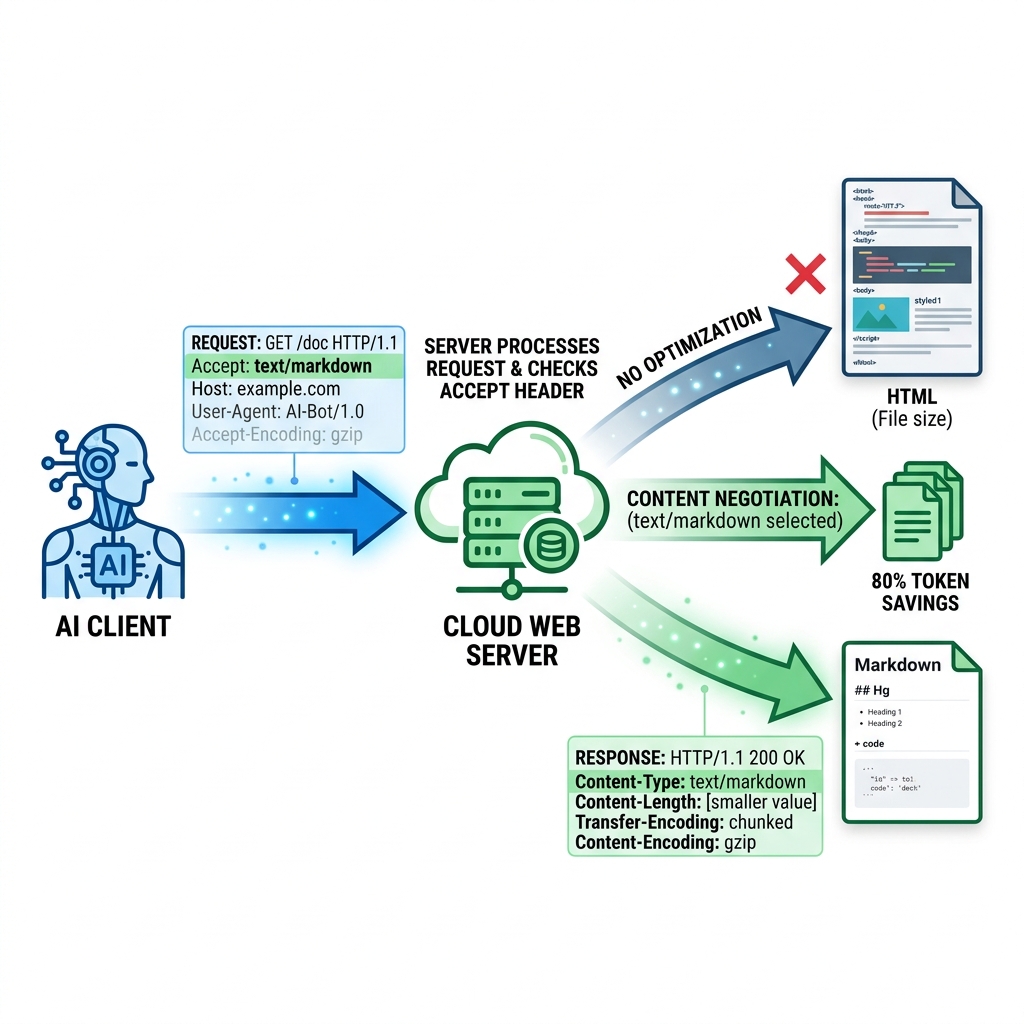
Figure 1: HTTP Content Negotiation Pipeline comparing raw HTML fallback against native text/markdown response.
Token Reduction
Strips HTML tags & DOM clutter
Context Window Boost
Fits more articles per prompt
Edge Response Speed
No headless browser rendering
Free Open Standard
Supported by Cloudflare & AI bots
Method 1: Test Website Support with the Free Online Tool (Easiest)
You can verify whether any website or API endpoint supports the Markdown for Agents standard instantly using our free Markdown for Agents Checker.
- Open the Markdown for Agents Checker.
- Enter the target website URL (for example:
https://blog.cloudflare.com/markdown-for-agents/). - Click Check Website Support.
- Review the returned
Content-Typeheader, status code, estimated token savings, and extracted content preview.
If the target server returns text/markdown, the tool highlights a green confirmation badge. If it defaults to text/html, the tool provides an estimated token savings breakdown if the page were converted to Markdown.
Method 2: Check Markdown Support Using cURL
Developers and systems engineers can test HTTP content negotiation directly from the command line using cURL by including the Accept: text/markdown header:
curl -i -H "Accept: text/markdown" https://blog.cloudflare.com/markdown-for-agents/
Check the HTTP response headers in the terminal output. A supporting web server will return a 200 OK status accompanied by the header content-type: text/markdown; charset=utf-8.
Comparing Raw HTML vs Markdown for Agents
The table below highlights the key differences and performance metrics between standard HTML web pages and native Markdown responses:
| Feature / Metric | Standard HTML Web Page | Markdown for Agents Response |
|---|---|---|
| Content Type Header | text/html; charset=utf-8 | text/markdown; charset=utf-8 |
| Average Token Count | 12,000 to 25,000 tokens | 2,000 to 4,000 tokens |
| Token Savings Ratio | Baseline (0%) | Up to 80% to 85% reduction |
| Primary Audience | Desktop & Mobile Web Browsers | AI Agents, LLM Bots, RAG Pipelines |
| Parsing Overhead | Heavy DOM Tree & JS Execution | Zero Parsing (Direct Plain Text) |
Key Benefits of Supporting Markdown for Agents
Implementing and checking Markdown for Agents support offers key technical and financial advantages for website owners and developer platforms:
- Reduced API Inference Costs: LLM pricing is calculated per thousand input tokens. Reducing prompt size by 80 percent dramatically lowers AI infrastructure costs.
- Expanded Context Capacity: Fitting 5x more content into LLM context windows allows AI agents to digest longer articles, documentation pages, and datasets in a single prompt.
- Superior Search Indexing for AI Agents: AI search engines prioritize websites that deliver clean, fast, and structured content over heavy, script-choked pages.
- Zero JavaScript Execution Needed: Edge servers return pre-computed Markdown without requiring headless browser execution or heavy client rendering.
Related free developer tools
- Markdown for Agents Checker - Inspect website Accept: text/markdown support and token reduction metrics.
- HTTP Header Checker - View all HTTP response headers, server types, and security headers.
- Website Source Code Viewer - View and format raw HTML source code of any web page.
- MDX Formatter - Format and beautify MDX and Markdown files with custom indentations.
Frequently Asked Questions
What is the Accept: text/markdown header?
It is an HTTP request header sent by AI agents and HTTP clients to request a plain Markdown version of a web page instead of standard HTML.
How do I test if my website supports Markdown for Agents?
Enter your website URL into our online Markdown for Agents Checker or run a cURL command sending the Accept: text/markdown header.
Does Markdown for Agents replace HTML for human visitors?
No. Standard web browsers send Accept: text/html headers and receive full HTML pages, while AI crawlers requesting text/markdown receive Markdown.
How much token reduction can I expect?
Most blog posts, documentation pages, and news articles achieve between 75 percent and 85 percent token reduction compared to raw HTML code.
Ready to test your website? Use our free Markdown for Agents Checker to analyze HTTP response headers, verify content negotiation support, and measure token savings for AI applications today.